
2026 Tornado Response
Update as of August 31 at 8:30 AM
A Message of Gratitude and Community Impact from Our CEO
Following the July 27 tornado, Volunteer Fox Cities helped turn community compassion into coordinated action. Working alongside municipal leaders, nonprofit partners, and hundreds of supporters, we operated a Volunteer Reception Center that connected volunteers, donations, and essential resources with those impacted by the storm.
In just six days, more than 6,000 volunteers stepped forward to help. Thousands of donated items were received, sorted, and distributed to neighbors in need. This response was only possible because of the incredible generosity of our community and the support of partners who helped extend our small but mighty team.
Thank you to every volunteer, donor, partner organization, and community member who stepped up during this difficult time. Together, we demonstrated the strength, resilience, and compassion that define the Fox Cities.
Continued Ways to Help
Visit our Tornado Response initiative on Get Connected to view current volunteer opportunities and in-kind donation requests:
View Volunteer Opportunities & Donation Requests
As recovery progresses, new opportunities may be added, so we encourage you to check back regularly.
Looking for Support?
If you or someone you know has been impacted by the tornado, resources remain available.
Virtual Multi-Agency Resource Center (MARC)
The Virtual MARC, which is run by Winnebago County, connects community members with recovery information, available resources, and assistance programs.
Call 211
For help finding local resources and services, dial 211 or visit 211 Wisconsin. Specialists can connect you with available disaster recovery supports and community assistance programs.
Phone: 211
Website: https://211wisconsin.communityos.org/
Looking to Donate?
Financial support remains one of the most effective ways to assist long-term recovery efforts.
Community Response Fund
Donations to the Community Response Fund help provide critical resources and support for ongoing tornado recovery efforts throughout our community.
Donate Here: https://unitedwayfoxcities.org/tornado/
Thank you for helping our neighbors rebuild and recover.
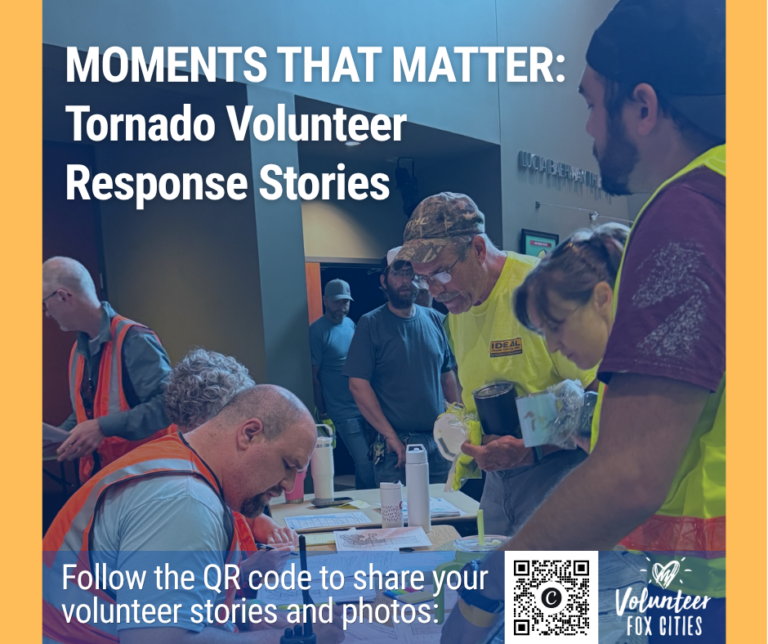
Moments That Matter: Tornado Volunteer Response Stories
The tornado response showed the extraordinary power of volunteers coming together when it mattered most. From distributing supplies and supporting families to organizing donations and clearing debris, thousands of people gave their time, talents, and energy to help their neighbors.
These moments of service remind us that recovery is about more than rebuilding structures. It’s about strengthening community connections, creating hope, and showing up for one another during difficult times.
Have You Been a Volunteer?
We would love to hear your story.
Share your experience, photos, and reflections from volunteering during tornado response efforts and help us celebrate the impact volunteers continue to make across our community.
Submit your story, photos, or reflections using the QR code below or visit:
www.volunteerfoxcities.org/tornado.vol.stories
Thank You
The immediate response phase may be over, but recovery continues. Volunteer Fox Cities remains committed to connecting people who want to help with meaningful opportunities to support our neighbors.
Thank you for being part of this story of resilience, generosity, and community.